
The Origins of the Russo-Ukrainian Conflict
The roots of the Russo-Ukrainian War trace back to February 2014, following Ukraine's Revolution of Dignity. Russia annexed Crimea and supported pro-Russian separatists in Donbas. The conflict escalated with cyberwarfare, naval incidents, and growing tensions. By February 2022, Russia launched a full-scale invasion, marking the largest European conflict since World War II. The war led to massive casualties and a refugee crisis, while Ukraine found itself at the center of geopolitical manipulation.

The Prelude to War: NATO’s Expansion and Western Promises
Since the dissolution of the Soviet Union, NATO has expanded eastward, incorporating former Soviet states despite promises to Moscow that the alliance would not move closer to Russia’s borders. Ukraine, a key buffer state between Russia and the West, found itself at the center of this strategic tug-of-war.
The 2008 NATO Bucharest Summit declaration stated that Ukraine would eventually become a NATO member, despite opposition from Russia.
The Maidan Revolution of 2014, which led to the ousting of pro-Russian President Viktor Yanukovych, was heavily supported by the US and EU.
Following Ukraine’s shift towards the West, Russia annexed Crimea and backed separatist movements in Donbas, intensifying hostilities.
Despite NATO’s open-door policy, Ukraine was never granted full membership, creating a security vacuum where Kyiv was encouraged to challenge Russian influence without the full backing of NATO’s Article 5 defense guarantees.
The US and NATO’s Tactical Push
In the lead-up to the 2022 invasion, the US played a crucial role in escalating tensions rather than diffusing them.
Military Build-up and Intelligence Leaks: The US repeatedly warned of an impending Russian invasion, releasing intelligence reports and satellite imagery, which may have provoked preemptive Russian actions.
Arms Shipments and Training: Washington provided Ukraine with advanced weaponry and training, effectively turning Ukraine into a NATO partner in all but name, further antagonizing Russia.
Rejection of Diplomatic Solutions: Russia’s demands for security assurances, particularly Ukraine’s non-membership in NATO, were dismissed outright by the US and its allies.
While Ukrainian officials were led to believe that NATO’s support would be unwavering, the reality was far from it. The US and Europe supplied arms but avoided direct military involvement, leaving Ukraine to bear the brunt of Russian aggression alone.
US Intelligence and NATO Involvement
Between March 2021 and February 2022, Russia conducted large-scale military build-ups near Ukraine. Meanwhile, US intelligence revealed plans of a Russian invasion, publishing satellite images and assessments. The US claimed Russia had a list of key targets for neutralization, fueling panic and justifying heightened NATO activity in Eastern Europe. Throughout this period, NATO leaders made provocative statements, reinforcing Ukraine’s path to NATO membership, despite Russia’s repeated warnings against it.
NATO Secretary General Jens Stoltenberg’s firm stance that Russia had “no say” in Ukraine’s membership contradicted previous agreements, particularly the 1990 assurances given to Russia about NATO’s non-expansion eastward. Instead of seeking a diplomatic resolution, the US and NATO positioned Ukraine as a frontline state against Russia, making any form of neutrality untenable.
Ukraine's NATO Dream and the US Withdrawal
Ukraine viewed NATO membership as the ultimate security guarantee against Russia. However, NATO made it clear that membership could only be considered once the war ended and Ukraine met all necessary conditions. Even in the 2023 NATO Summit, alliance members remained deliberately ambiguous, with the US and Germany resisting a clear timeline.
When it became apparent that Ukraine’s war effort was faltering, US support wavered. The Biden administration continued military aid but avoided direct intervention, while European allies started showing fatigue. The Washington Summit in July 2024 reiterated Ukraine’s “irreversible path” to NATO membership, yet failed to address immediate security concerns.
Trump’s Intervention: A Pragmatic Shift?
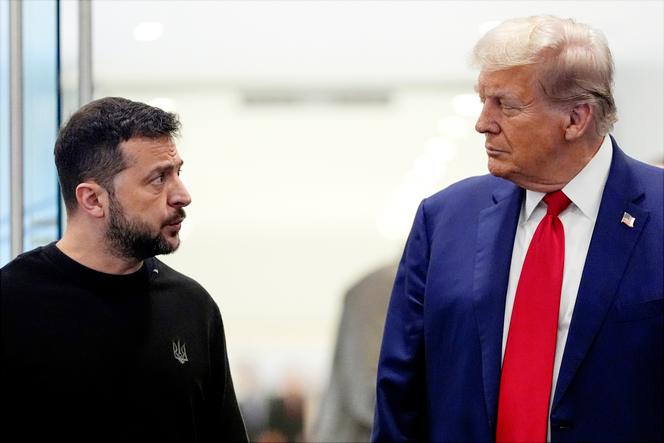
The 2025 geopolitical landscape shifted dramatically with Trump’s return to power. He openly criticized Ukraine’s leadership, blaming Zelenskyy for the war. Trump’s statement that Ukraine should have “made a deal” three years ago marked a significant departure from previous US policy. His remarks on Truth Social, calling Zelenskyy a “dictator” running a country “without elections,” further alienated the Ukrainian president.
Trump's dialogue with Putin and efforts to end the war through negotiations in Riyadh signaled a shift from escalation to de-escalation. By seeking a diplomatic resolution, Trump positioned himself as a leader aiming for global stability rather than prolonged conflict. US-Russia talks in Saudi Arabia marked the first major high-level engagement since the war began, underscoring the new administration’s pivot toward practical diplomacy.
UK's Position and Starmer’s Commitment
The UK under Prime Minister Keir Starmer took a more interventionist approach. In contrast to the US’s cautious detachment, Starmer suggested deploying UK troops in Ukraine as part of a security guarantee. His statement, emphasizing that “peace cannot come at any cost,” indicated a willingness to prolong the conflict if necessary. However, this stance risked escalating tensions further, contradicting broader European efforts to negotiate an end to hostilities.
Pakistan’s Neutral Stance: A Diplomatic Balancing Act
Pakistan maintained a neutral position, abstaining from UN resolutions condemning Russia. While Islamabad refrained from outright support for Moscow, it continued to engage in trade, importing discounted Russian oil and wheat. This policy reflected Pakistan’s broader foreign policy stance of prioritizing economic stability over ideological alignments. However, it also highlighted contradictions—Pakistan has historically upheld territorial sovereignty yet avoided condemning Russia’s violation of Ukraine’s sovereignty.
In-Depth Analysis: Who Won and Who Lost?
The US strategy of using Ukraine as a buffer against Russia proved disastrous for Kyiv. By encouraging Ukraine’s NATO aspirations while failing to provide direct military intervention, Washington effectively abandoned Ukraine in a precarious position. The European powers, already suffering from economic strains due to prolonged sanctions on Russia, grew weary of the endless conflict.
On the other hand, Russia, despite facing significant setbacks, managed to maintain territorial gains and re-establish its influence. The US-Russia talks under Trump’s leadership signaled the potential for a new global order, with Washington shifting its focus from confrontation to strategic negotiations.
Ukraine, however, emerged as the biggest loser. Trapped between Western assurances and Russian aggression, it suffered immense destruction, economic collapse, and declining public trust in its leadership. With Trump advocating a shift in US policy, Ukraine faces an uncertain future, with its NATO ambitions appearing more distant than ever.
Conclusion: A War of Deception and Abandonment
The Russo-Ukrainian War exposed the duplicity of Western powers. The US played a central role in pushing Ukraine toward conflict, only to withdraw substantial support when it became inconvenient. Trump’s pivot toward diplomacy offers a potential off-ramp, but it also underscores the reckless policies that led Ukraine into this quagmire. In the end, Ukraine remains a tragic case of geopolitical maneuvering, bearing the brunt of a war it was neither prepared for nor fully supported in winning.
In this conflict policy of Pakistan is very good and sensible
ReplyDelete